Curator’s tour with Barbara Mahlknecht: Landscapes of Unrest: Bodies, Memories, Revolt
Bita Bell, Kandis Friesen, Jeanna Kolesova, Olia Sosnovskaya
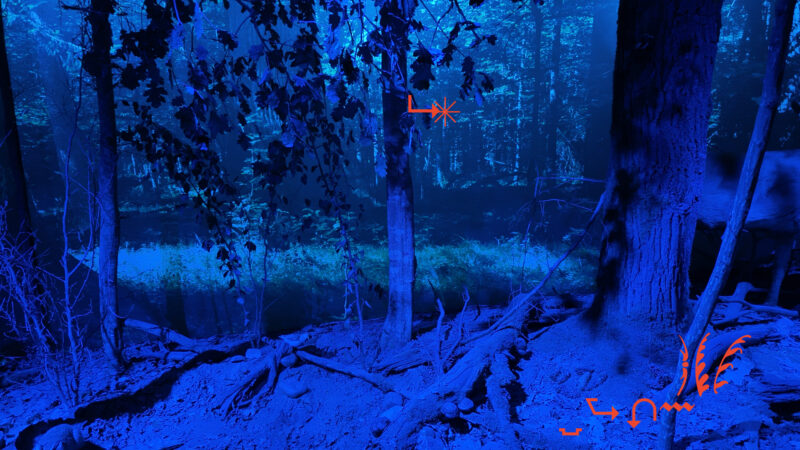
Exhibition tour through the exhibition Landscapes of Unrest: Bodies, Memories, Revolt at Kunstpavillon with Barbara Mahlknecht.
The Künstler*innen Vereinigung Tirol invites you to an curator´s tour at Kunstpavillon on Wednesday 10.06.2026 at 18.00 with free admission.
During the tour through the exhibition, you will be given insights into the artistic positions and the curatorial and theoretical considerations behind the exhibition.
The exhibition brings together works by the 2025–26 Fellows Bita Bell, Kandis Friesen, Jeanna Kolesova and Olia Sosnovskaya. The artists explore forms of resistance and memory within the tensions of imperialism, extraction and colonial-capitalist violence, past and present. They examine how bodies, landscapes and architectural ruins act as witnesses and become sites of unrest and uprising.
Bita Bell’s work engages with solo protest performances in public space through writing and movement and understands choreography as a pattern of social behavior, revealing how orientation, stillness, duration, repetition, and traces reorganize relations between bodies, spaces, and their powers. Kandis Friesentraces the material and ephemeral remains of the former Soviet Gulag Karlag in Karaganda, closed in 1959, where architecture, landscape and sound carry and transmit historical memory; Jeanna Kolesova’s filmic work approaches wetlands and marshes as ecological, political and cultural archives of violent destruction and potential resilience, embodied in the figure of the Swamp Spirit; and Olia Sosnovskaya’s research engages the Białowieża Forest as a contested historical space shaped by imperial decline, partisan resistance and the so-called refugee crisis since 2021, exploring it as an archive of extraction and border regimes as well as a site of knowledge and revolt.
The exhibition shows how collective and individual memory persists in bodies, landscapes, architectures as well as in oral histories, songs and ghostly traces, and how, not least through artistic imagination, it can become a force of unrest, uprising and resistance.
More information on the exhibition here.
Visitor information
Kunstpavillon